
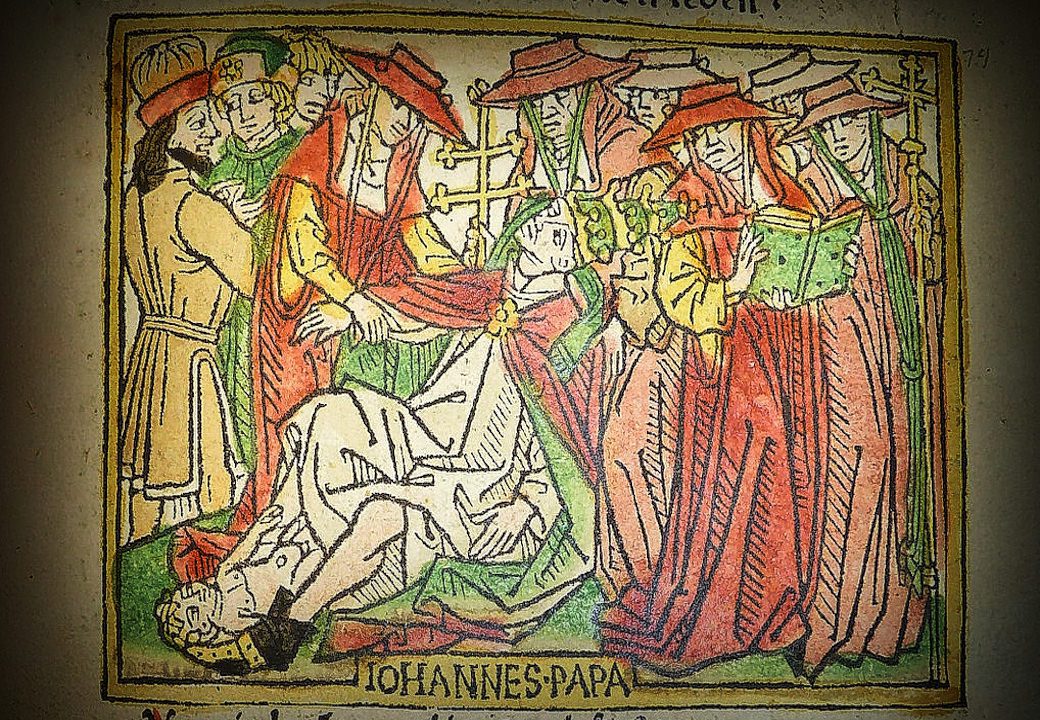
Popess Giovanna
The story of Papessa Giovanna, or Pope Joan, is one of the most fascinating and enduring legends of the medieval period. Whether it is a true account or a product of anti-papal sentiment in the 9th century AD remains a topic of speculation. While historians have debated its authenticity for centuries, the tale continues to captivate imaginations worldwide.
The story was first recorded in 1250 by a Dominican friar named Jean de Mailly in his manuscript Cronica Universalis. According to his account, Giovanna Angelica was a young orphan who, after meeting a monk, fled with him to the Orient. The monk provided her with an education, a privilege denied to women at the time. This formative experience allowed her to disguise herself as a man, adopt the name Johannes Anglicus, and pursue a clerical career. Upon the monk’s death, Giovanna joined the Roman Church, eventually rising through its ranks to become a notary of the curia, then a cardinal, and ultimately Pope John VIII. Her papacy is said to have lasted from 853 to 855.
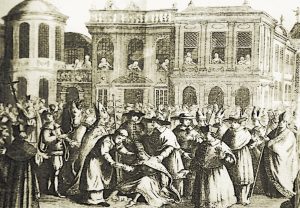
The brevity of her reign is attributed to the discovery of her secret. According to the legend, during an Easter procession near the Basilica of San Clemente in Rome, Giovanna’s horse was startled by an approaching crowd. In her attempt to calm the animal, she went into premature labor, revealing her identity as a woman. The crowd, overcome with fury and betrayal, reportedly tied her and her newborn child to the horse, dragging them both to their deaths. She was allegedly stoned at Ripa Grande, and her body was said to have been buried in a spot between San Giovanni in Laterano and San Pietro in Vaticano.
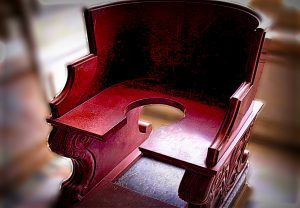
Following this scandal, her successor, Benedict III, is said to have erased all records of her existence from the Church’s official history. The story also gave rise to a peculiar protocol for confirming the gender of future popes. It is claimed that subsequent pope-elects were required to sit on a “stercoraria,” a ceremonial chair with a hole in the middle. Deacons would perform a physical examination and then publicly declare, “Virgam et testiculos habet” (“He has a penis and testicles”). While some historians argue that the stercoraria was used for imperial ceremonies or even as a toilet, its connection to the Pope Joan legend adds an intriguing layer of mystery.
The story of Pope Joan gained literary prominence through Giovanni Boccaccio, who mentioned her in chapter 101 of his De mulieribus claris (On Famous Women). This work, a collection of biographies celebrating notable women, highlights the figure of Papessa Giovanna as a cautionary tale or a symbol of female ambition in a male-dominated society.
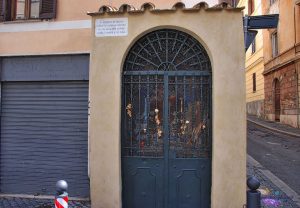
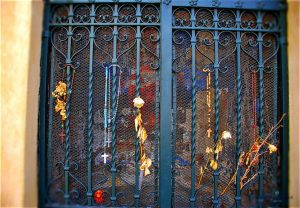
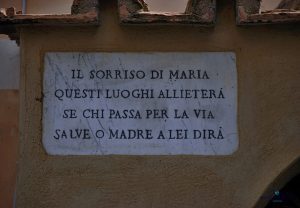
Today, traces of the legend can still be found in Rome. At the corner of Via Santissimi Quattro Coronati and Via dei Querceti, there is a small “sacello,” or round opening covered by an iron gate, where some believe Pope Joan is buried. This site adds a physical dimension to the myth, drawing curious visitors and perpetuating the mystery.
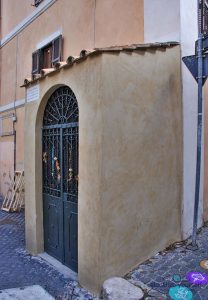
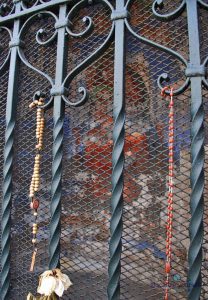
Despite its compelling details, most historians regard the tale of Pope Joan as apocryphal. It likely emerged as a reflection of anti-papal sentiment during the medieval period, a time when the Church faced criticism for corruption and moral lapses. The absence of concrete evidence and the lack of mention in earlier records support the theory that Pope Joan is more legend than fact.
Nevertheless, the story of Papessa Giovanna has endured through centuries as a symbol of resistance against rigid societal norms and as a critique of the patriarchal structures of the time. Whether she truly existed or not, Pope Joan remains a fascinating figure in the annals of history and a reminder of the enduring power of myth.
So, was there a female pope? The answer may never be known. For now, the legend of Pope Joan continues to inspire debate, intrigue, and imagination.
Leave a Reply