
Once Upon a Time…a Cat
Once upon a time in Rome, a city known for its rich history and mythos, a cat achieved a distinction that set it apart from all other creatures.
This cat, embodying the perfect Roman citizen’s spirit, appeared idle and indolent, detached from worldly concerns. Yet, like the astute citizens of ancient Rome, it was always watchful, always ready to spring into action when the moment demanded.
Rome, a city that intertwines its history with legends and stories, dedicated a street to this remarkable animal: Via della Gatta. Once, there was even a Piazza della Gatta, now known as Piazza Grazioli, named after the 16th-century Grazioli family’s palace. This transformation pays homage to Riccardo Grazioli Lante della Rovere, a hero who died in the war in Libya in 1911. The palace’s entrance still bears a plaque commemorating him.
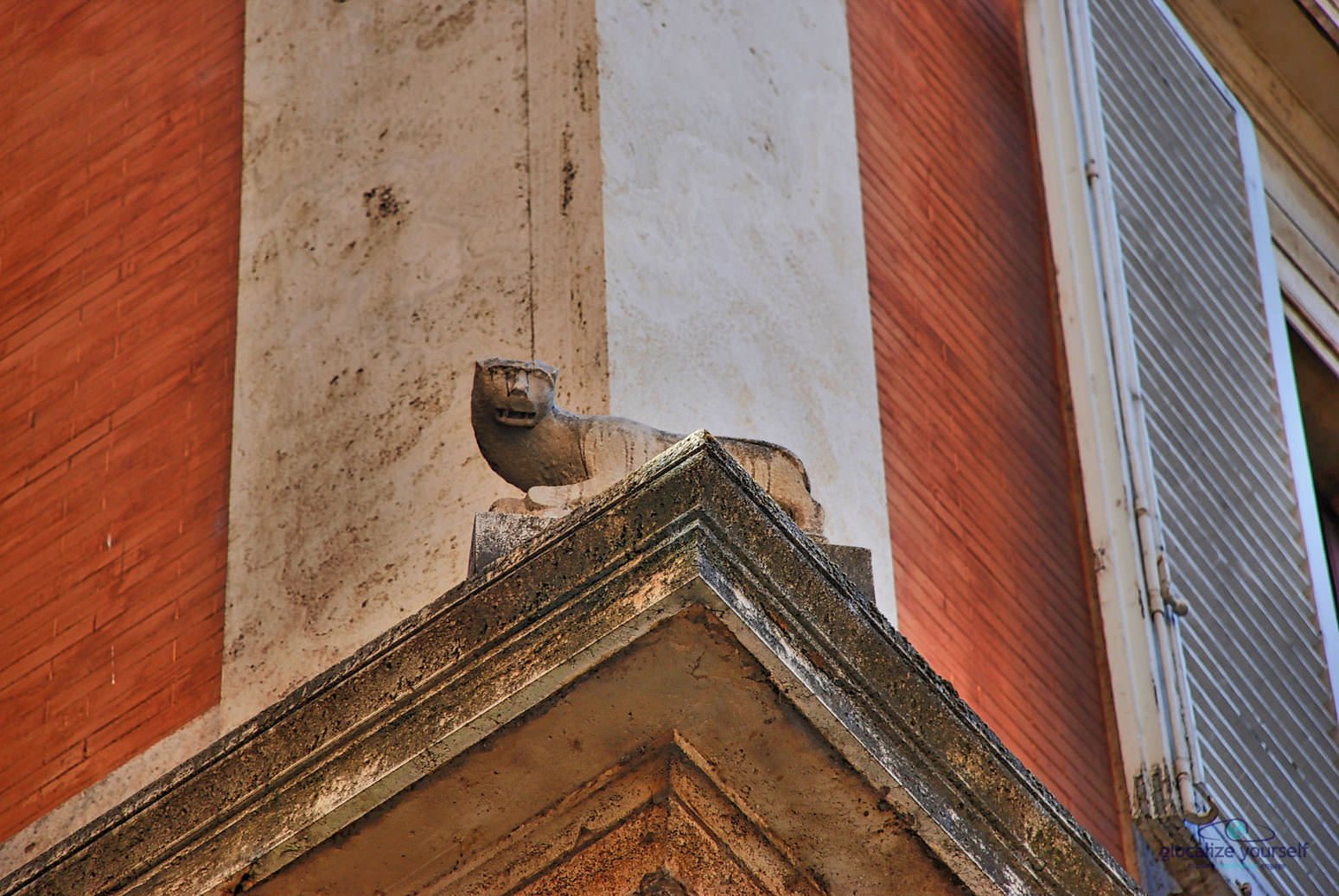
But why did a cat earn such an honor in Rome? According to local lore, a cat once roamed the rooftops of this very area. One day, it noticed a child precariously wandering along a building’s ledge. The cat, sensing the imminent danger, began meowing frantically. Its persistent cries alerted the child’s mother, who rushed to save her infant just in time.
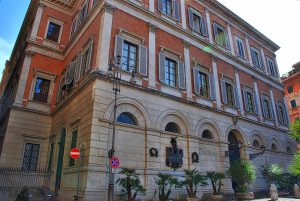
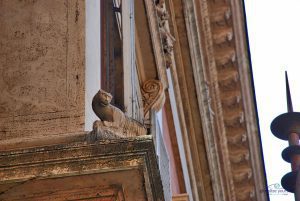
In gratitude for this feline heroism, a marble statue was erected on Palazzo Grazioli, at the corner of Via della Gatta. This statue is believed to have originated from the Temple of Isis, or Iseum Campense, which once stood in the area. The temple, dedicated to the Egyptian goddess Isis and her consort Serapis, was constructed in 43 BC. Despite enduring numerous trials, including being destroyed by fire in 80 AD and subsequently rebuilt by Emperor Domitian, its relics now lie scattered throughout the city.
The cult of the cat in ancient Egypt, intertwined with Rome’s own reverence, highlights the animal’s esteemed status across cultures. In Egypt, cats were sacred, often mummified and buried with their owners. Killing a cat, even accidentally, was punishable by death. This veneration is epitomized in the city of Bubastis, home to the grand temple of Bastet, where thousands gathered annually to celebrate the goddess with lavish festivals.
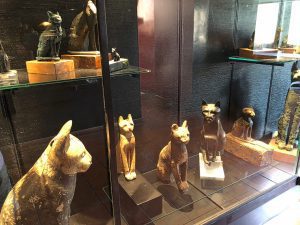
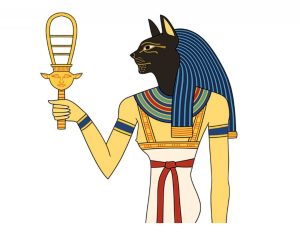
Interestingly, this cat statue, might symbolize Bastet, the cat-goddess of motherhood and protection. Bastet perfectly aligns with the cat’s role in the legend. Bastet was often depicted as a lioness or a woman with the head of a lioness or a domestic cat. She was worshipped for her nurturing and protective qualities, embodying both the fierce guardian and the gentle, caring mother. The story of the Roman cat, passed down through generations, resonates with the attributes of Bastet, blending Roman and Egyptian cultures in a tale of watchful guardianship and divine intervention.
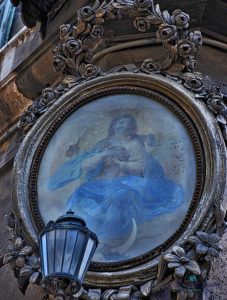
Moreover, Rome’s reverence for the cat extends beyond this singular legend. At the corner of Via della Gatta and Piazza del Collegio Romano, on Palazzo Doria-Pamphili, there’s a Madonnella—a sacred portrait—depicting the Madonna tenderly holding a cat. This painting, named “The Immaculate Conception,” dates back to 1796 and further cements the cat’s place in Roman culture and spirituality.
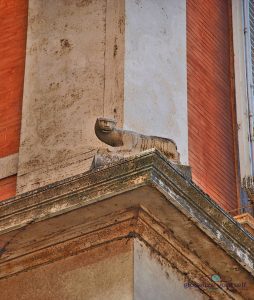
But as with any Roman legend, one tale is never enough. Another intriguing story suggests that where the cat’s eyes gaze lies a hidden treasure. Despite countless attempts, this treasure remains undiscovered, shrouded in mystery. As Marco Lodoli poetically notes, “cats have pupils who look the Elsewhere,” perhaps hinting that the treasure might not be material but something far more valuable.
Beneath the cat’s vigilant gaze stands the Biblioteca Rispoli. Could it be that the true treasure is the vast repository of knowledge housed within this library? Established in 1899, Biblioteca Rispoli holds a significant collection of books and manuscripts, offering a treasure trove of cultural and intellectual wealth to those who seek it. In a city where history and legend intertwine, the Biblioteca Rispoli serves as a beacon of learning and enlightenment, a fitting tribute to the ever-watchful cat.
In Rome, the story of the cat of Via della Gatta serves as a bridge between past and present, myth and reality. It reminds us that even in the bustling heart of a modern city, the echoes of ancient tales continue to resonate. Whether through a marble statue, a sacred painting, or the silent gaze of a cat, the spirit of Rome endures, watching over its people, ready to intervene at the right moment—just like the legendary cat that saved a child from a perilous fall.
Leave a Reply